Winter roof damage in Wisconsin often starts with snow buildup, ice dams, and freeze thaw cycles that weaken roofing materials over time. Many issues stay hidden until water begins to enter your home or visible damage appears.
Cold weather creates conditions where moisture can move beneath shingles, refreeze, and slowly break down key parts of your roof. This process can lead to hidden roof leaks, damaged flashing, and structural concerns that are not always obvious right away. In Wisconsin, repeated freeze thaw cycles are one of the most common causes of winter roof damage, as expanding ice forces materials apart over time. Heavy snow accumulation can also add weight stress to roofing systems, increasing the risk of snow damage to roof structures and accelerating wear in vulnerable areas.
Understanding how winter weather affects your roof helps you catch problems early. Below, you will learn what causes winter roof damage, how to spot early warning signs, and when to schedule a professional roof inspection.
Winter Roof Damage Often Goes Unnoticed in Wisconsin
Winter roof damage in Wisconsin is harder to detect because snow and ice can hide developing issues for months. Many homeowners do not realize their roof needs attention until the spring thaw or when a leak appears inside the home, which is why scheduling a roof inspection can help catch issues early.
Here’s how winter roof damage in Wisconsin can develop over time:
- Snow buildup hides damage: As snow accumulates, underlying roofing issues remain out of sight while stress on the roof increases.
- Freeze thaw cycles weaken materials: Repeated freezing and thawing causes roofing materials to expand and contract, leading to cracks and separation.
- Ice dams trap water: Ice forming along roof edges prevents proper drainage, forcing water beneath shingles and causing hidden roof leaks.
- Moisture spreads unnoticed: Trapped moisture can soak into attic insulation and wood before any visible signs appear inside.
Small winter roofing issues often grow into larger problems by spring. Catching winter roof damage early helps protect your home and reduces the risk of more extensive roof repairs down the line. Freeze thaw roof damage can worsen quickly as temperatures shift, allowing small gaps to expand and let in moisture. In many cases, what starts as minor snow damage to a roof can lead to hidden roof leaks that require more involved repairs if left unaddressed.
Common Types of Roof Damage from Snow and Ice
Not all winter roof damage in Wisconsin is easy to spot. Snow and ice buildup can hide early warning signs while your roof weakens under pressure or small gaps form during freeze thaw cycles.
Common types of winter roof damage include snow damage to roof systems, freeze thaw roof damage, and hidden roof leaks.
Snow Damage to Roof Systems Builds Over Time
Heavy snowfall may seem harmless at first, but the weight adds up over time. As snow goes through freeze thaw cycles, it becomes dense and ice-packed, placing ongoing stress on your roofing system.
Here are a few signs of snow damage to a roof:
- Creaking or popping sounds coming from the attic
- Cracks forming in interior drywall
- Sagging along the roofline
These issues often develop slowly and may be mistaken for normal aging. Over time, excess snow load can lead to structural stress and visible roof damage.
Freeze Thaw Roof Damage Weakens Roofing Materials
Winter temperatures in Wisconsin often shift above and below freezing. As this happens, moisture enters small openings and expands when it freezes.
Freeze thaw roof damage can:
- Loosen shingle adhesive
- Crack or separate flashing
- Break down underlayment over time
As these cycles repeat, small vulnerabilities can turn into larger roof leaks and ongoing deterioration.
Hidden Roof Leaks and Interior Moisture
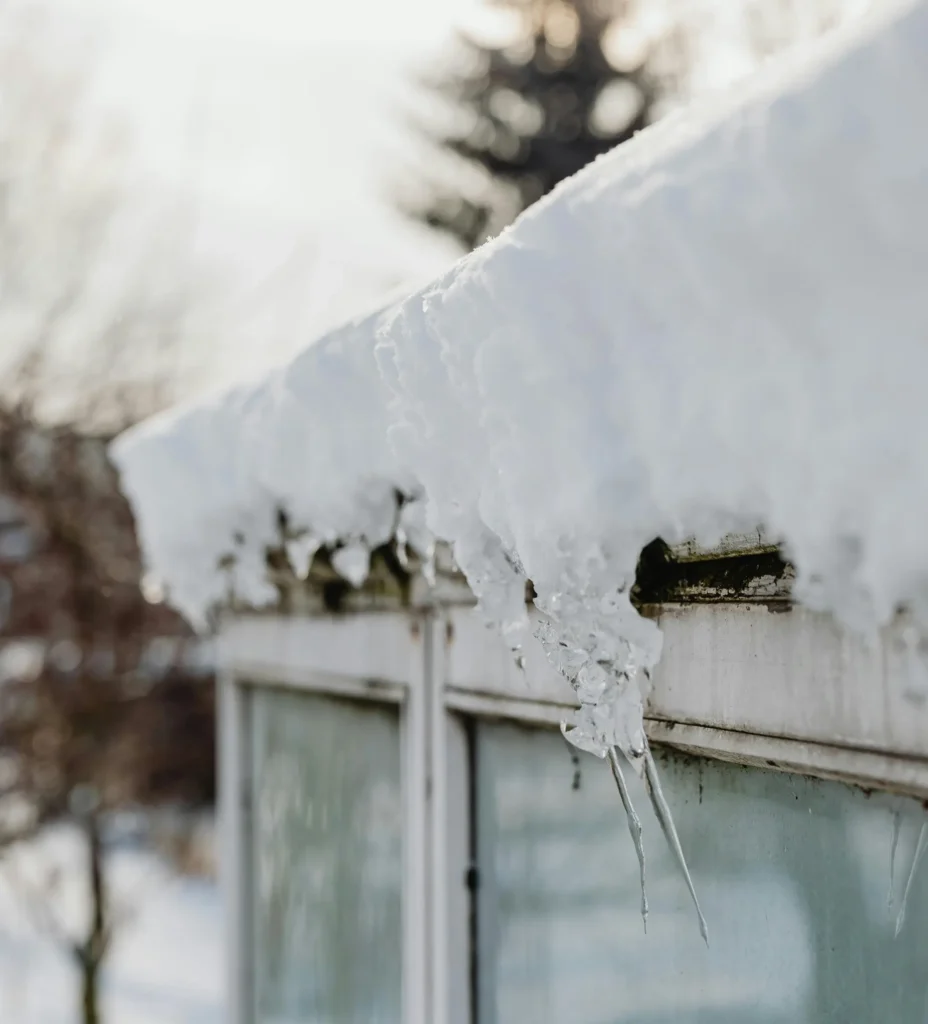
Hidden roof leaks often form beneath snow and ice buildup, especially around chimneys, skylights, and roof vents. When melting snow refreezes at the edges, ice dams can trap water behind them.
That trapped water can move under shingles and into your home without immediate signs.
You may notice:
- Damp attic insulation, indicating moisture buildup
- Mold or musty odors developing indoors
- Water stains appearing later, often during spring thaw
Hidden roof leaks often start small but spread quickly once moisture enters your roofing system.
When roof damage is caused by snow or storms, it is a good idea to schedule a professional roof inspection. Proper documentation can also help if you need to file an insurance claim. For more information, visit the Wisconsin Office of the Commissioner of Insurance.
Warning Signs Your Roof is at Risk of Winter Damage
Winter roof damage in Wisconsin often develops quietly as snow and ice build up over time, putting stress on your roofing system without obvious signs. As freeze thaw cycles repeat, small vulnerabilities can expand and allow moisture to enter beneath shingles, leading to hidden roof leaks and material breakdown. Many of these issues go unnoticed until interior damage begins to appear, which is why recognizing early warning signs is key to preventing more serious roof damage.
- Damp Attic Insulation
Moisture in the attic often points to melting snow or early freeze thaw roof damage. - Uneven Snow Melt on the Roof
This can indicate heat loss and areas where hidden roof leaks are more likely to form.
- Curling or Cracked Asphalt Shingles
A common result of repeated freeze thaw cycles weakening roofing materials.
- Shingle Granules in Gutters
This signals surface wear from ongoing snow damage to roof materials.
Early signs of winter roof damage are easy to overlook but can lead to larger issues if ignored. If you notice any of these warning signs, scheduling a professional roof inspection can help prevent more extensive roof repairs and protect your home.
Roofing Solutions Against Winter Roof Damage
Managing winter roof damage in Wisconsin comes down to early detection, preparation, and timely solutions. Snow buildup, freeze thaw cycles, and trapped moisture can all impact your roofing system, especially during long Wisconsin winters.
Working with a professional roofing company for roof inspections and roof repairs helps your home stay protected and perform reliably throughout the season.
Winter Roof Inspection
A professional winter roof inspection helps identify early signs of winter roof damage before they become larger issues. A thorough inspection evaluates shingles, flashing, roof penetrations, and attic conditions where hidden roof leaks often begin.
Winter Roof Repairs
When winter roof damage occurs, timely roof repairs help restore your roof and prevent further moisture intrusion. Addressing cracked shingles, damaged flashing, or ventilation concerns early supports long-term roof performance.
Preventing Winter Roof Damage Before It Starts
Proactive maintenance plays a key role in reducing the risk of winter roof damage. Keeping gutters clear, monitoring attic ventilation, and addressing small issues early can help prevent snow damage to roof systems and limit the effects of freeze thaw cycles. Proper gutter systems also help direct melting snow and water away from your roof, reducing the chance of ice dams and hidden roof leaks.
Staying ahead of winter roof damage helps reduce the risk of unexpected repairs during the coldest months.
FAQs About Winter Roof Damage in Wisconsin
Can you replace a roof during winter in Wisconsin?
Yes, roof replacement can be completed during winter in Wisconsin with proper planning and safety measures. Cold weather requires adjusted installation techniques, so working with a local roofing professional helps ensure the roof performs as expected.
Do you need a permit for roof repair in Wisconsin?
Permit requirements depend on the scope of the project, not the season. Minor roof repairs often do not require a permit, while full roof replacements or structural work usually do.
What causes winter roof damage in Wisconsin?
Winter roof damage is often caused by snow buildup, freeze thaw cycles, and ice dams. These conditions can lead to hidden roof leaks, material breakdown, and moisture entering the home if not addressed early.
Protect Your Roof Before Winter Damage Gets Worse
Staying ahead of winter roof damage in Wisconsin comes down to timing and knowing what to look for. Addressing small issues early can help extend your roof’s lifespan and reduce the risk of more involved repairs as conditions change.
If you need professional roof repair or guidance on next steps, our team is here to help. Contact us to schedule your roof inspection and get clear, straightforward recommendations for protecting your home this winter. Call (608) 400-5512 to get started.